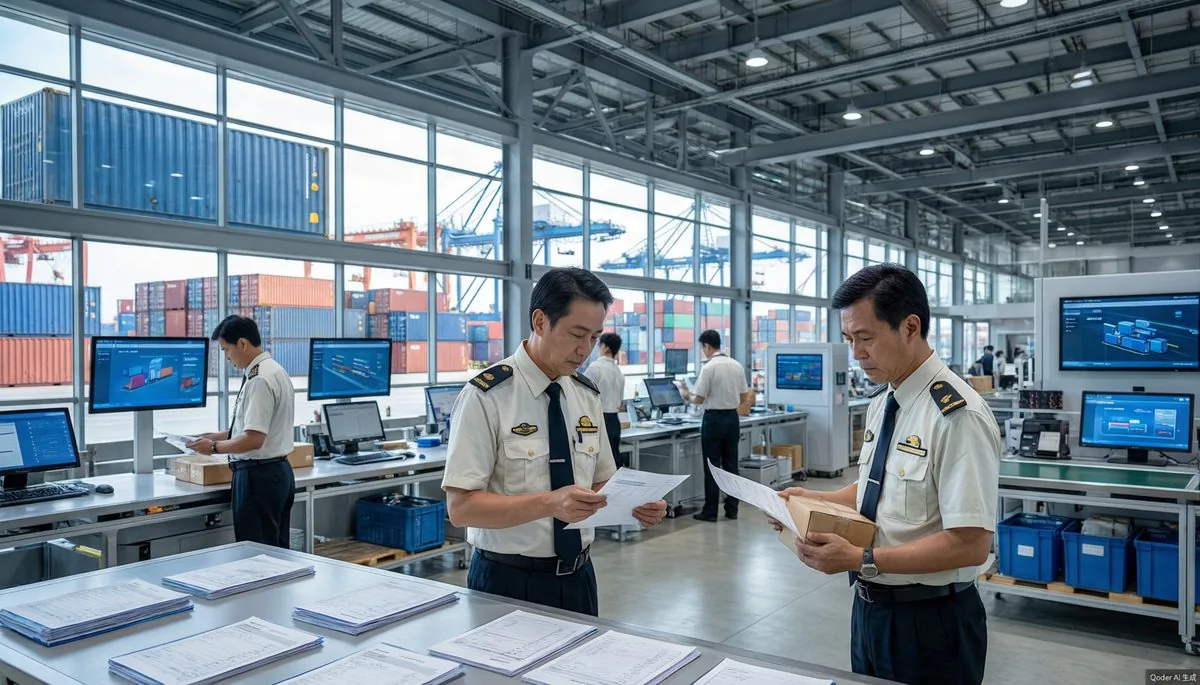
DANGEROUS GOODS
Dangerous Goods Shipping from Ningbo Class 3 · 4 · 5 · 6 · 8 · 9 · IMDG Compliant
Lithium batteries, chemicals, paints, aerosols and other regulated cargo shipped correctly. We review your MSDS, secure DG-approved bookings, prepare compliant documentation and deliver to 200+ ports worldwide.
DG Classes We Ship from Ningbo
| IMO Class | Type | Typical Cargo | Status |
|---|---|---|---|
| Class 3 | Flammable liquids | Paints, coatings, solvents, alcohol-based products | Accepted |
| Class 4 | Flammable solids | Metal powders, matches, self-heating materials | Accepted |
| Class 5 | Oxidizers & peroxides | Calcium hypochlorite, peroxides | Accepted (case by case) |
| Class 6 | Toxic substances | Pesticides, chemical reagents | Accepted |
| Class 8 | Corrosives | Batteries acid, cleaning chemicals | Accepted |
| Class 9 | Miscellaneous | Lithium batteries UN3480/3481, eco-unfriendly substances | Accepted |
| Class 1 / 7 | Explosives / radioactive | — | Not accepted |
What You Need Before Booking
Our team handles the DG declaration at Ningbo port, supervises packing and segregation in the container, and produces the full IMDG documentation set the carrier requires.
MSDS
A current Material Safety Data Sheet for every product — we review it free of charge and confirm the correct UN number, packing group and class.
DG Packaging Certificate
Export DG cargo must use UN-certified packaging with a valid Chinese 危包证 (performance + use certificate). We guide your factory through the application.
Accurate Declaration
Cargo must be declared exactly as produced. Misdeclared DG risks container rejection, fines and blacklisting — we verify before tendering to the carrier.
DG Booking
We apply for DG space with carriers that accept your class at your destination. Approval typically takes 3–7 working days; book 7–10 days ahead of ETD.
Lithium Battery Shipping — UN3480 & UN3481
Batteries are the most common DG enquiry we receive. UN3480 covers lithium-ion batteries shipped alone; UN3481 covers batteries packed with, or contained in, equipment. Both move under Class 9 with strict state-of-charge, packaging and labelling requirements.
We ship lithium batteries on selected carriers and routes that maintain stable DG policies — not every line accepts them. Send us your battery specification sheet, watt-hour rating and packaging photos for a compliance check before you commit to a production schedule.
Common Mistakes That Get DG Shipments Rejected
Wrong or Missing MSDS
Outdated MSDS without UN number, or MSDS that contradicts the declared cargo name, leads to instant booking rejection.
No Certified Packaging
Household-grade boxes or drums without UN certification cannot be loaded. Your factory must source UN-certified packing and obtain the 危包证.
Under-Declaration
Declaring chemicals as 'non-hazardous' to save cost is the fastest route to container detention, penalties and carrier blacklisting.
Late Booking
DG space needs carrier approval. Booking 3 days before ETD usually means missing the vessel.
FAQ
Can you ship DG by air from Ningbo?
Limited classes and quantities only, under IATA DGR. Most DG moves more economically by sea; we will advise the viable option after reviewing your MSDS.
Do you provide DG packaging in Ningbo?
Yes. For cargo consolidated at our warehouse we can arrange UN-certified drums, jerrycans and cartons plus the packaging certificate application.
How much does DG surcharge cost?
Carriers charge a DG fee per container plus documentation. The premium varies by class and route — send the MSDS for an exact quote within 24 hours.
Is 100% battery cargo by sea legal?
Yes, on compliant services with correct packaging, marks and state-of-charge limits. We only book lines whose DG policy we have verified in writing.
Get Your Free Quote
Send your cargo details — commodity, weight, volume, destination — and receive a line-by-line quote within 24 hours.
The Nine IMO Hazard Classes
Every dangerous goods shipment is classified into one of nine classes under the IMO International Maritime Dangerous Goods Code. Getting the class, UN number and packing group right decides whether a carrier accepts the booking at all.
| Class | Category | Typical examples |
|---|---|---|
| 1 | Explosives | Fireworks, ammunition, airbag inflators |
| 2 | Gases | Aerosols, LPG, oxygen cylinders, refrigerated gases |
| 3 | Flammable liquids | Paints, solvents, alcohols, adhesives |
| 4 | Flammable solids | Matches, sulphur, self-reactive substances |
| 5 | Oxidising substances & organic peroxides | Hydrogen peroxide, ammonium nitrate, peroxide hardeners |
| 6 | Toxic & infectious substances | Pesticides, medical waste, diagnostic samples |
| 7 | Radioactive material | Medical isotopes, industrial gauges |
| 8 | Corrosives | Battery acid, hydrochloric acid, sodium hydroxide |
| 9 | Miscellaneous dangerous goods | Lithium batteries (UN3480 / UN3481), dry ice, magnetised material |
Dangerous Goods Shipping FAQ
Documentation, lead times and the consequences of getting a declaration wrong.
What documents does a dangerous goods booking need?
At minimum: the safety data sheet (SDS/MSDS), a dangerous goods declaration with UN number and packing group, a packing certificate, and UN-specification packaging with correct markings and labels. Carriers may ask for additional approvals depending on the class.
How early must dangerous goods be booked?
Earlier than general cargo, because the carrier runs an internal DG approval review before releasing space. Assume at least several working days before the sailing, and more for classes 1, 6 and 7 or for any first-time commodity. Ask us at enquiry stage and we will tell you the real lead time for your UN number.
Can lithium batteries be shipped by sea from Ningbo?
Yes, and it is routine — but they must be declared under UN3480 (batteries alone) or UN3481 (packed with or contained in equipment), packed to the relevant packing instruction, and labelled correctly. Undeclared lithium batteries are the single most common cause of refused bookings and penalties.
What happens if dangerous goods are mis-declared?
The consequences are serious: fines from the carrier and maritime authorities, cargo held or destroyed, potential liability for incidents, and being blacklisted by carriers. Mis-declaration is never worth the rate saving — declare accurately and let us handle the approval.
Do you handle door-to-door dangerous goods?
Yes, where the commodity and destination allow it. It requires DG-certified handling at origin, licensed inland transport, and a destination agent able to receive the class. Tell us the UN number early and we will confirm what is actually possible door-to-door.
Related Services & Resources
- Ocean Freight (FCL/LCL)Full and less-than-container load to 200+ ports
- Air FreightAir import/export, courier, door-to-door air
- Customs ClearanceImport/export declaration, inspection, HS codes
- Reefer & Cold Chain20RF/40RH containers, -30C to +30C control
- Door-to-Door & DDPFactory pickup to overseas delivery, one all-in quote
- Freight FAQTransit times, air billing weight, FCL vs LCL, Incoterms